Friday, June 24, 2011

Pravasan Pillay: Humour me

Pravasan Pillay was born in 1978 in Durban. He has published a chapbook of poetry, Glumlazi (2009), and a collection of comedic short stories, Shaggy (2011), co-written with Anton Krueger. Pillay's poetry and short stories have appeared in numerous books and journals and on websites. His short story 'Mr Essop' appears in The Edge of Things, an anthology of South African short fiction published by Dye Hard Press. His humour pieces have appeared in A Look Away MagazineMail & Guardian and McSweeney's. He is the editor and co-founder of the small press Tearoom Books. Pillay has worked as a freelance journalist, philosophy lecturer, production and project manager, and copy editor. He currently lives in Sweden and works as the international editor of a Swedish trade magazine.

DH: Your short story ‘Mr Essop’, in The Edge of Things, focuses on a child growing up in Chatsworth, Durban, where you also come from. It makes me curious about your background and how you came to writing.

PP:I come from a single-parent working-class family. Both my parents read a lot and I was encouraged to do the same, so I got through many of the classics at an early age, as well as lots of genre and contemporary fiction. Apart from books, I read superhero, horror, fantasy, sci-fi and war comics, and humour magazines such as Mad. Unlike many parents, mine didn't discourage me from reading comic books. I don't think they made a distinction between high-brow and low-brow culture, which is something I inherited from them. My parents divorced when I was quite young and my mother, brother and I moved around a lot, and that meant having to transfer schools a few times. I think the combination of being quite lonely at each of these schools – which is something I didn't mind too much – and my appetite for reading probably led me to writing. I began writing jokes, stories and plays around the age of 10 or 11.

To what degree has your background influenced your writing? You have said that you dislike being labelled an ‘Indian writer’.

I can understand why I might be labelled as an Indian writer. My short fiction is all set in a little corner of the Indian township of Chatsworth, which is the place I know and can write about best, and the characters are all Indian – so there's certainly legitimate grounds for my race to be highlighted. However, I'd like to think that what I'm trying to do in the stories, technically and thematically, is a bit more universal.
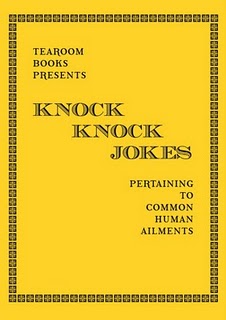
You have worked in various creative forms – short fiction, poetry, film and music – and one common thread among them is humour. I am thinking specifically of the  Knock Knock Jokes  pamphlet you published through Tearoom Books and your most recent book, Shaggy (BK Publishing). I sometimes get the feeling that humorous writing is frowned upon in SA, that it is not considered ‘serious’. Do you think that South Africans, considering our history, are a bit too obsessed with tackling ‘serious’ topics? There are also many different approaches to humour – it is a bit of a loose term. Do you have any singular approach?

I think that the lack of a proper humour culture in South Africa can be traced partially, as you mention, to our history and the fact that humour writing isn't viewed as legitimate as more 'serious' forms of writing – which is a laugh because it’s far more difficult to write a good joke than it is to write, say, a poignant short story or poem. I would add that the national character of the country seems to lack the comedy gene; the majority of people don't seem to get satire, parody or irony. You have to be quite literal if you hope to make it as a comedian. So even if humour writing suddenly becomes respectable, I doubt you would see an outpouring of cutting-edge satire. But, despite these stumbling blocks, South Africa has produced a small but talented pool of genuine comedic masters. I'm thinking here of writers such as Herman Charles Bosman, Pieter Dirk Uys, Robert Kirby, Tom Eaton, Gus Ferguson, Imraan Coovadia, Ndumiso Ngcobo and a few others.

You're right, there are many different kinds of humour; and it’s important for a writer to know what kind of laugh he or she is aiming for. I suppose my own approach to humour tends towards the sarcastic and ironic. The late Robert Kirby said: ‘You can’t have humour without offending somebody. Every joke offends somebody down the line. Humour that didn’t plunge the knife into somebody’s ribs would be terribly pale, vapid, weak.’ I concur.

You published a small collection of short poems, Glumlazi, as Tearoom Books’ first title. Some of the poems are only two lines long, almost like haiku or text messages. Do you think that brevity is often more powerful than longer, ‘more developed' poems? Sometimes it seems to me that very short poems can act almost like a punch in the face or a wisecrack.

I'm not sure if shorter poems are more powerful or not, but they're what I prefer reading and writing. I like your use of the word ‘wisecrack’ because I think that's a more accurate classification of the contents of Glumlazi. It was a mistake to label it as poetry. I think that the brevity of the pieces and the inauthenticity of the emotions expressed in them are a reaction to the earnestness and clichéd register of ‘more developed poems’ that you mention. In a way, what I was trying to do was a kind of anti-poetry.

You started Tearoom Books a few years back, with your wife Jenny. Tell us more about it. There is also the Tearoom Books blog, which posts daily. It’s not just a promotional online presence for your press, but an online publication in itself.

Tearoom Books is the natural development of my interest in zines, hand-made books and micro publishing. I've always micro published in one way or the other. While I was at high school I wrote and distributed comic books and co-wrote a satirical weekly handwritten newsletter, and at university I edited and distributed a photocopied zine. I started Tearoom Books because I wanted to publish Glumlazi and I was pretty sure that no else would. Our aim at Tearoom is to publish well-designed chapbooks and pamphlets of contemporary poetry, fiction and humour. We're happy to keep it very small scale, perhaps a chapbook a year.

The blog publishes new content from writers that I enjoy. To an outsider, the site can appear a bit incoherent ‒ that's a consequence of trying to achieve a tone rather than a unifying theme.

Tearoom Books recently published its first e-book, the anthology of poems and recipes called Reader Digest. Is the shift to e-books likely to be permanent?

I prefer print to the screen. Reader Digest was published as an e-book purely because I didn't have the money to print it. It's been relatively successful receiving close to 1000 reads, which we would have never achieved with a regular chapbook – so that's something to keep in mind for future publications. But if we have the financial resources, I still see us doing hard copies.

You have also made some short films, and with Jenny formed a folk music duo called The Litchis. Tell us more about that. Which filmmakers and musicians/bands do you like?

The films are amateur, essentially home movies with credits appended on them. Last year we shot a more professional – at least by our standards – effort and hopefully we'll get it edited some time this year.

The Litchis was started as an archival project with the aim of translating the sugar-cane plantation stories of the late folklorist Sivakami Chetty into a folk music idiom. We later encompassed a few other folk stories, such as Rachel de Beer.

I watch a lot films and have a particular interest in b-movies and exploitation cinema. I think that there's very compelling art to be found in these genres. Most people watch these types of films in quite a condescending, ironic way – which I think is a shame. There's a quote which I recently came across in the comment section of an exploitation film site which summarises my attitude well: ‘Films like [these] are folk art...like the works of Grandma Moses or Henry Darger. Their failures of perspective, anatomy or narrative logic are excused when they achieve effects that go beyond the conventional. Because movies are seen as a narrative art, naive works like [these] don't get the same sort of consideration that other forms of folk art receive.’ I think that if you consider b-movies in this manner, as folk expressions or folk art, then a different type of interpretation and appreciation becomes possible. Because these films are made by amateurs or people on extreme fringes of the established movie system, their contents and structures are very often free of the clichés found in mainstream and even art house or indie cinema.

As far as music goes, I enjoy the country blues and folk.

You have mentioned your love of comics. What is it about comics that attracts you?

I don't read comics as much as I used to, but when I did it was the stories above all that drew me in – which is the same thing that I look for in prose. Having said that, there are things that you can do with images and text that can't be done as well in prose or film. For instance, look at Alan Moore's graphic novels From Hell or Watchmen, which are two of my favourite books. The structure and the complexity of the plots and references in these works could never be done as well in other mediums, which is why the film adaptations were so bad.

In collaboration with Anton Krueger, you have just published Shaggy, a collection of humorous monologues. How did the collaboration work? Brion Gysin wrote  that when there is a bringing together of two minds, there is the creation of a third mind, which, as I understand Gysin, almost starts operating as an independent entity. What is your opinion on that?

Writing with Anton is probably one of the most enjoyable creative experiences I've had. He is remarkably generous both as a collaborator and a person. We have different approaches to humour: Anton is more in-the-moment and favours the absurd while I'm more structured and grounded in the everyday. His humour is also more humanistic while I tend towards meaner, more offensive comedy. I think that either extreme on its own wouldn't work, but by combining our sensibilities we temper each other and the result is a more well-rounded comedy.

The book arose by accident. Anton and I had originally planned to write one story together, and it was meant to be a serious genre piece. We attempted a few more of these but we found it impossible to not insert jokes into them, always at very serious moments. That's when we decided to abandon genre stories and write straight-up comedy. We write a story by first batting around a few conceits until we can both agree on one, then we create a shared online document which we both work on simultaneously. The first draft gets written quite quickly, in about a day or two, then we put it aside for editing at a later date. Even after we'd written quite a few of the stories, we still didn't have any concrete publishing plans in mind. Our sole aim was to make the other person laugh.

I would agree with Gysin's observation. The writing in Shaggy definitely comes from a 'third mind.' Reading through the manuscript it was very difficult to remember which one of us came up with a particular joke.

Any other comments?

Who gives the shower head?

Friday, May 13, 2011

Kobus Moolman: Defending the value of poetry

Kobus Moolman has published several collections of poetry, including Time Like Stone, Feet of the Sky, 5 Poetry (with others), Separating the Seas, and most recently, Light and After (Deep South). He has also published two volumes of drama: Blind Voices and Full Circle. He has been awarded the Ingrid Jonker prize for poetry, the PANSA award and the DALRO poetry prize. He lives in Pietermaritzburg and teaches creative writing at the University of KwaZulu-Natal.

DH: Your first book of poems, Time like Stone, was published in 2000 and your latest, Light and After, in 2010. Over the ten years, how do you view your poetry as having progressed?

KM: Phew! Has it progressed? Has it maybe just changed? Has it maybe even stayed the same? The same concerns. The same small patch of earth I’ve walked round and round. The same dry bone I’ve come back to gnaw.

One thing I do think has happened is that I have learnt ‒ am learning ‒ to trust more. To be less obsessed with wanting to know what my poems are about, what they mean, as I write them, to want to know what I am writing about as I write, and just to write. To write and let the words speak. To efface myself. To trust that the words ‒ words, language ‒ have their own in-built system of purpose and beauty and strength. And that the more I allow this natural element within language to speak, rather than trying to force the words to say something deliberately, the stronger will the eventual product be. It is almost like writing with my eyes closed. Like walking with my eyes closed. And only knowing what I wanted to say once I had said it.

Yes, of all the things that might have changed in these ten years, this is it. The overwhelming sense that I don’t know what the hell I am doing. But that it doesn’t matter. That doubt is more important than certainty. That the spaces and the emptiness and the holes in a poem are just as important as the solid and tangible things.

Many of your poems seem to becoming shorter, tighter, and more economical with words – in fact some are like word snapshots, a bit like the short poems of William Carlos Williams. Has he been an influence on your work? What poets have influenced you?

William Carlos Williams has not been such an influence upon me. I have read his work, but only in snatches. This economical style you speak about is probably more the influence of writers like Paul Celan. And Anne Carson, who, although she writes long poems, is always absolutely precise. There is nothing that is not absolutely essential in her lines. Everything counts.

Celan’s apparent obscureness (his difficulty) fascinates me. I come back again and again to his work and always find new experiences. Not new meanings. I don’t know what his poems mean. But there are new worlds of experience, new sensations.

And then there are a whole host of other poets whose work and whose lives have fed and enriched my practice. Locally Karen Press, Tatamkhulu Afrika, Don Maclennan, Joan Metelerkamp and Rob Berold have been huge influences. And internationally it’s Lorca and Nelly Sachs, Ingeborg Bachman, Johannes Bobrowski and Yannis Ritsos, Yehuda Amichai, and Erin Moure, Nicole Brossard and Alberto Rios and Miguel Hernandez. The list goes on. The list changes, and gets updated and revisited.

You live in KwaZulu-Natal, whereas a lot of literary publishing tends to be located more in Johannesburg or Cape Town. There used to be a sort of cultural tension between Johannesburg and Cape Town, which I think has now diminished considerably. Do you think there is still some regionalism in South African writing and publishing? Is regionalism a negative thing, or can it be positive?

Yes, I think there is a kind of regionalism. At least a sense that JHB and Cape Town are where things are happening and that the other centres don’t really exist. Or don’t matter. Or don’t get as much serious attention. But there are also equally other centres of poetic power – like Grahamstown, and Elim (around someone like Vonani Bila). Even Durban – the Durban of Douglas Livingstone and Fernando Pessoa. It is an odd thing, this conglomeration of writers in particular places. And then the sense of egoism and even hubris that builds up there. And it is very, very hard to decide whether one should be part of those centres, be there, sharing, participating. Or not. Whether one can in fact, perhaps not necessarily write, but be published and be recognised and accepted outside those centres. I don’t know the answer. Sometimes I do feel on the periphery. And sometimes not. Sometimes it doesn’t matter. And sometimes the very notion of a centre and a periphery is meaningless. It disappears, and there is just writers. Universal writing.

For 12 years you published a print literary journal, Fidelities, twice a year. How did it start up? Print literary journals now are becoming scarce in South Africa, hardly anyone seems to want to buy them.

The first issue appeared in 1994. It really began like most good things after way too much to drink. A close friend Richard Walne, who sadly died a few years ago, and I were involved in planning an arts festival in Maritzburg. And one night we were sitting around drinking whiskey and he suggested we put together a journal of local poetry for the festival. Well, this was the first edition of Fidelities. We did it together for two years and then Richard moved town, and I just carried on with it. It slowly grew to being more than just local writers, firstly just around KZN, and then nationally. It was really good fun in its heyday. I enjoyed finding all these strange unheard of writers. I enjoyed providing a platform for their work. But eventually a whole lot of negative factors began to tip the scale. I had originally got support from the National Arts Council, and then when this faded I managed to get support from the local city council. And that worked very well for a while. But eventually that too stopped. There were hardly any subscriptions. Some sales, but not enough to support the production costs. So I was eventually funding it myself. And then the time required for the magazine also eventually began to tell. And it ceased being fun. It was like some kind of obligation. And so I eventually let it go. That was in about 2007, I think. Now and then I do miss it. I miss the little community of writers, of likeminded people that congregate around a magazine – Green Dragon has them, New Contrast too. And there is some kind of feeling of closeness, a certain solidarity among them. I like this.

The issue of print publishing  leads onto the issue of online publishing and e-publishing. What is your opinion on this?

I don’t really have an opinion. I don’t unfortunately use online publishing that much – or read material online. I’ve never read a book online. It’s not snobbishness, nor even some kind of Luddite prejudice. I just haven’t got into it. I still like the smell of a book. But I don’t have a problem with online publishing and e-publishing. It’s another resource for people. And that’s fine. It’s just not one that I am comfortable with – from a practical point of view. I don’t know if this question of yours is also meant to probe the future of the book, and of bookshops. And here I would have strong feelings. It is clear that we cannot go back to some kind of mentality pre the Kindle etc. That is reactionary. But like newspapers, and all other print media, books and bookshops are going to have to find some kind of strategy of survival, some niche that they occupy alone, and that they can aggressively sell. I grew up in bookshops. My greatest pleasure in life is to sit on the floor in a bookshop, behind a high shelf, and to make a pile beside me of options: this or that, this or that.

You teach creative writing at the University of KwaZulu-Natal. What sort of contribution does teaching creative writing at tertiary level make to South African literature?

I don’t know that our job as teachers of writing is necessarily to turn out writers. This might sound odd. I think writing courses – and specially accredited ones that give the student a degree – can give people false hopes; can give them a whole lot of expectations that simply will never be met out there in the big real world. Quite simply not everyone who attends a writing class is a writer. Just as not everyone who studies history is going to be an historian. People study history, and writing, for a whole lot of other reasons than simply wanting to be an historian. Or wanting to be a writer. And this is right. This is good. There are a whole lot of other skills and forms of knowledge that are acquired in the process, apart from a very narrow focus on the demonstration of the ability to be a writer or historian or mathematician, etc. We learn what goes in to making a poem or a novel. We learn what is takes to be able to make a poem. We understand the process. And this is vital in making us better readers; more able to appreciate what other writers have done. So I think this is what writing courses, degrees in writing, can contribute. Apart from just churning out a whole lot of writers – which is unrealistic.

You did some creative writing workshops in prisons back in the late 1990s. What was that like?

Teaching in prisons has taught me a lot about our prejudices towards people, the way we stereotype ‘the criminal’. In most case what really shocked me about standing in front of a class of inmates was actually that there was very little distinction between myself and them. Between them and the warders. In many cases (of course not all) it is often just wrong decisions. And we all make wrong decisions.

And then also teaching in a prison – particularly teaching writing – has really brought home to me the fact that literature is not an elitist activity. That it has got nothing to do with intelligence or cultural sophistication. I have read Wopko Jensma to men and women inside, and they got it! They have understood what Jensma was saying much better than many third- year English students ever have. The inmates felt what Jensma was saying. Many of the inmates were enormously receptive to studying and then writing poetry, precisely because they understood the value of poetry. They understood what poetry could do for them sitting inside. It was and is a vehicle for understanding themselves, for understanding and expressing who they were.

An issue that has been cropping up lately is the question of whether South African readers – and writers – are losing their sense of critical evaluation, for a number of reasons. While I think it is excellent that South Africans are reading and responding positively to local literature, there is a danger than assessment turns into a sort of cheerleading session.

Yes, I think there is something of this ‘cheerleading’ which has descended upon writing here and now. And what alarms me about this is the parochialism and, on the other side, the mediocrity, that is cultivated. Instead of looking inward – at the South African market – we should be looking outward – at the global market. How do our writers compare and compete there? That is for me more interesting that how we compare with each other. And then I also feel writers must be prepared to take greater risks with their forms, their content, with themselves than many South African writers do. We must be prepared to be even slightly ahead of what the reader out there is wanting or expecting. Of course, this is very tricky. We all want our books to sell. And if they do not sell then it is unlikely we will be published again. A vicious cycle! But as writers we must challenge both ourselves and our readers. We must challenge what writing is today, what its conventions are. This is the way that we will stay relevant and new. That we will be able to keep our society on its toes ‒not by placating each other.

To get back to your writing: you have published two volumes of drama – Full Circle and Blind Voices. What has been your experience in writing drama and having your plays performed?

I love writing drama. But I do not like writing for the theatre. I love the sound and the taste of real words in real people’s mouths. But I do not know how to get the plays out there and performed. The latter is so fraught with costs and stuff. I find it very hard to get my plays performed, so much so that I am now just focusing on writing plays that don’t need to be performed. That can simply be read. Is it still a play? I don’t know. I don’t care. I call it a play. And that’s what matters. Writing is for me important. Writing is for me the real and main challenge. I am not good at negotiating with people and doing the whole production thing. Raising the funds etc. I just want to write the thing and then give it over to someone else to do all the rest of the production stuff, and then just let me know when the opening night is. But in most cases, at least in South Africa now, it does not happen like that. We have to write and produce our own work. And I don’t honestly have the psychic energy to do that anymore.

What would you regard as the main challenges facing South African poets now?

Firstly, finding publishers. Publishers who will take on the challenge of solo or even group collections. The magazines are doing a fantastic job. And they themselves are struggling. Battling for subscribers. But they are out there. And they are brave. But the publishers themselves are afraid of poetry. Clearly, as they argue, because it doesn’t sell. And it doesn’t sell – at least not in this country – because nobody reads it. And nobody reads it because they don’t see the significance of it; they don’t value it. It is just fluff, decoration. But after publishers, what we desperately need in this country are people who can distribute and market poetry. This is so critical. It is a real skill. And it is also the main reason that as poets our work isn’t really read. Because people don’t know about it. And they don’t know about it because nobody is going around to the bookshops to promote poetry titles. It is not up to the poets to do this. All of us have done this. But we are not cut out for this. This is not our job. We can barely keep body and soul together enough to write, never mind having to schlep around to bookstores to sell our work. I will gladly pay someone to do this. But there are very few such people in South Africa. Again, the publishers should do this. But my experience – certainly of those who publish poetry – is that despite their sterling efforts they do not have the time or the resources. And so once again poetry falls by the wayside. We can’t really blame the public for not reading poetry, or bookshops for not stocking poetry (there are many out there who do want to), when in actual fact the problem is the marketing and the distribution of poetry books.

Tuesday, March 1, 2011

Yannis Livadas: The margins of a central man

Yannis Livadas was born in Kalamata, Greece in 1969. He has done dozens of different jobs and travelled extensively in India, Tunisia, Algeria, Italy, France, Morocco, Portugal and Spain. He has published seven poetry collections, the most recent being Ati: Scattered Poems 2001-2009. He has translated the work of authors such as Jack Kerouac, Gregory Corso and Charles Bukowski. He lives in Paris, France.  

DH: I'm curious about your background. When did you start writing seriously? 

YL: My background was the mess of the entity. Existence whirls and spirals unceasingly in its void; one must find ways to scan it on the wing. To lose self, to be a poet. I started writing poetry because I had a congenital tendency for writing, ink and paper. It was the only thing that was making me feel complete. I started writing seriously when I was sixteen or so, but I first published when I was thirty. It was really great to experience fortitude all this years. I had no reason to be in a hurry about it. 

You were once a bookseller and a publisher. What was that period like? 

 Ahh, that was a period full of mishaps and troubles. But I had to do that; I really liked the idea of making books, selling books, but those four years were more than enough. I faced too much bureaucracy in this country. So instead of being fulfilled publishing books I just suffered at the hands of officialdom. But it was also fun and I made new friends.

At first glance, your poetry looks surrealist, but your main influences seem to be pre-surrealist authors such as Apollinaire, but particularly Blaise Cendrars. What is it about Cendrars' work that attracts you and how has his work influenced you? 

 Apollinaire? No way! Not even the surrealists! I have studied their work extensively and I still enjoy reading a poem or two of theirs; maybe I prefer them to most of the poets of our time, but that’s all. There are no influences from that kind of stuff. Surrealism lacks what I call, with regard to my own poetry, “awakened realism”. Cendrars, my poetic grandfather, was the most pulsating of all modernists and, of course one of the first. Cendrars still remains a poetic capital. Cendrars is a perfect exception. I consider him the greatest poetic spirit of the twentieth century. His main influence on me was his idea that consciousness is the highest hallucination of all. As a poet I am interested only in the voice of the Muse. I have no other interests. That’s what the poem is all about. Poetry is art, not just writing, as it seems generally considered to be just about everywhere. The world is full of hobbyists, poets are so few. That’s a sign of our times. But this situation still provides a great opportunity to people with dignity to make a difference. Honor alit artes. 

You have translated many of the Beat writers, particularly Kerouac, but also borderline Beat figures like Bukowski. What attracts you to the Beats? What relevance do they have in 2011?

Some of the Beats; like those you mention, were geniuses. They forced writing to exalted levels. They were true and serious and headed only straight ahead. A few days ago, my second volume about the Beats came out. It’s a volume of essays, various translations and original criticism. I am translating Kerouac, Bukowski, and many others of that period because readers and new scholars in my country must be aware of them in order to start something new. Which I hope will happen someday. Right now I am translating Kerouac’s Vision Of Cody and afterwards there is a series of books waiting. But the Beats have not influenced my writing, as some idiots in my country think. 

What about some of the modern Greek poets – such as Seferis, Elytis, Ritsos and Valaoritis – have they had much an influence on your work? 

None at all. I am completely indifferent to their work. They are mediocre for my taste. I have studied a tremendous amount of Greek poetry but I choose to turn the other way. I had no time to waste. There were other Greek poets such as Karouzos, Papaditsas and Spanias who elevated Greek poetry in other, more eclectic approaches. Still, there is no influence from them either; I prefer more dangerous and dexterous ways. I gamble, and exalt the existence of man into its natural emptiness. I laugh while I am meditating on death; that’s my aesthetics. 

Like many of the Beat poets, you are a jazz aficionado. You have written an as yet unpublished history of jazz. What attracts you to jazz? 

Jazz is a whole culture; a way of life. Thus, it is a way of making art. I started to hear jazz and collect records in my late youth, at a time that I was mainly listening to other stuff. But jazz knocked me out. Really. Jazz is absolutely free and at the same time absolutely unequivocal. I wrote a book about jazz called Round About Jazz: The History of Jazz from the Age of Bebop to The Present. It took some years to find a publisher; now I am waiting to hear from him when the book will finally come out. 

What is the literary and publishing scene like in Greece? I should imagine the financial crisis has had a huge effect on publishing? And the small publishing scene? 

Greece was running in the wrong direction for many years. It still is. This country faces huge problems. A lack of political direction and, most of all, education and culture. Most of the creative publishers here are in trouble. Still, there are things happening. The future will provide the evidence. We’ll see. 

You had two books of poetry published in English, Coltrane and 15 Poems for Jazz, and The Margins of a Central Man, which was published by Graffiti Kolkata. The Coltrane book was translated into English by the well-known US poet Jack Hirschman and Dimitri Charalambous. How did that come about? 

I have been in contact with Jack Hirschman since about 2000. I was fortunate to have some of my poems translated by him with the assistance of Charalambous. The book is now out of print. Maybe it will come out again, I have no idea. The Margins Of A Central Man is a book of twenty or so poems of mine, translated by myself for my Indian friends who luckily speak English. It’s a great honour for me. 

 You have an unpublished prose work – what is it? Is it fiction?

I am not a prose writer, but I wrote that book. I find hard to describe its contents but I can tell you that is quite unique in its style and connectiveness. I keep it somewhat secret. I have not published even a section of it. Most publishers find it too non-mainstream. It’s not going to sell the way they would like. Publishers are in need of a bestseller, so they don’t bother. And that’s fair.

You have travelled quite a bit, mainly around Europe. You obviously like travelling. Do you find that it enriches and inspires you? 

Yes, I have also travelled in India and in North Africa. But the matter is not the place, the destination of the journey; it’s all about the traveller. That’s why the journey itself is what matters. As we say: the journey is you, nothing else. But let us not become fakes of the sensibilities. If you have to travel, you travel. When I travel, I do it for a sense of seclusion. Believe it or not, I am in a state of joyous, creative seclusion when I travel. Lately, I find my everyday life to convulse the same way. I am more than lucky. I am in my forties now, and life provides all kinds of gifts with outrageous generosity. Life is itself a poem. 

What projects are you busy with at the moment? 

Life, as always.

Sunday, February 6, 2011

Ingrid Andersen: The literary shift from print to pixel


Ingrid Andersen was born in Johannesburg, read for a degree in English literature and film and theatre criticism at the University of the Witwatersrand, and is currently completing her master's degree. Her work has been published in poetry journals for 16 years. Excision, her first volume of poetry, was published in 2004 and her second, Piece Work, was published by Modjaji Books in 2010. She is the founding editor of Incwadi, a South African journal that explores the interaction between poetry and image. (Photo of the author: Liesl Jobson/BookSA)

DH: About a year or so ago you started up the online poetry journal Incwadi. What was your motivation for starting the journal, and why did you opt for online rather than print?
IA: Getting published is difficult for South African poets, especially for emergent poets. It seems a poet cannot get published without already being published – a Joseph Heller situation.

The realities of the market are that hard-copy journals are expensive to produce and they rely on subscriptions to survive, more so than sales from book stores. There are very few journals out there – most of the journals I grew up reading no longer exist.

For some years, I had been speaking to other poets about my wanting to bring out a journal. I wanted to provide another space where good poetry could be published. Two years ago, I began to speak to friends who were editors of poetry journals, to get an idea of what was involved. I made the financial decision to go online with a simple, quality website. I do the html coding myself, so it costs me two weekends a year, with no overheads other than the cost of bandwidth. The benefit of online is that I can use images as well, and allow them to interact with the poetry – which has fascinating results.

In South Africa we were rather slow to accept online as a legitimate publishing medium. South Africa’s relatively low internet penetration – about 7%-9% of the population – probably has a lot to do with that. Do you think there are other reasons?

It takes time for people to absorb and adapt to change. Think of thirty years ago, when writers struggled to adapt to the new technology and preferred typewriters, tippex and carbon paper to computers.

We’re living in a time where changing technology challenges us to stay relevant almost on a daily basis. Perhaps, yes, we have a lower level of computer internet penetration here in South Africa, but I’ve been speaking to people on the cutting edge of technology who tell me that more and more people now access the internet via their cellphones. South Africa has one of the highest per capita usage of cellphone technology in the world– how do we take this into account?

I know of one writer who is making good use of the medium by writing serialised stories for teenagers. My publisher, Colleen Higgs at Modjaji Books, uses social networking very effectively.

I believe that online and digital formats are the future of publishing and will complement hard copy. I’ve just bought a Kindle and now purchase a number of my books in that format. I read my news online on News24 (to save trees) and I’ve made both my books available in digital format on Scribd via Book SA’s editor Ben Williams’ company Little White Bakkie.

Do you think that online publishing plays a role in negating the power of traditional cultural gatekeepers?

Without a doubt. The power the internet gives to the average individual is challenging all sorts of gatekeepers – for better or worse. People can now contribute to reporting by means of cellphone photographs/video and the secrets of politicians are now open for all to see through WikiLeaks; but at the same time, one can also read nauseating hate speak, prejudice and uninformed opinion on online fora and news page comment facilities. And, frankly, that open access is a double-edged sword.

As Kurt Vonnegut has said, “A moderately gifted person who would have been a community treasure a thousand years ago has to give up, has to go into some other line of work, since modern communications put him or her into daily competition with nothing but world's champions” .

There are writers who say that online publishing or online reviews are not as valid as reviews in print. I would like to challenge that perception: the medium doesn’t affect the validity of the message. As with print, it is the credentials of the reviewer that count.

What is the editorial policy of Incwadi, if any?
Incwadi accepts work from all South African poets and photographers. Work that explores the interaction between word and image is particularly welcome.

If there is a policy, it is that I am resolutely egalitarian: work is accepted on its literary merits alone – with no agendas whatsoever and regardless of whether the poet/photographer is established or not.

You recently had a new poetry collection, Piece Work, published. Not only is it a bigger collection than your previous collection, Excision, but the voice seems stronger and more confident.

The poems in Excision were drawn from poems written over seventeen years. Some of them had been published in journals during that time. The first poem I published was in the last issue of Slug News, before the start of Carapace. It appeared alongside a poem by one G Cummiskey, interestingly. It is interesting to see the evolution of my literary voice in that collection. The progression is visible: over the years, my voice became more sparing, tighter - more succinct, with more focus on the visual.

Over the years, I have interacted with and worked with other poets, which is always helpful to hone and sharpen one’s work. The poems in Piece Work were written later, over a period of four years from 2005 to 2009.

Another difference between the poems in the two collections is, generally, a greater economy of words. Bashō and the Imagists are mentioned as influences.

My poetry has over time grown more visual, terse and lean: words have to work hard – to be functional, to carry power. For me, poetry has the potential to be a visual art form in which one can see through the image or the object to meaning.

Over the years, some of the poetry I have delighted in: Pound’s “In a Station of the Metro”, William Carlos Williams’ “This is just to say” and Eliot’s “Preludes”, Sandburg’s “Fog”, just happened to be part of the brief flowering of the Imagist movement.

Recently, I re-read Pound and Hulme’s writings on Imagist Poetry, and felt that familiar jolt of recognition. Here was the muscular, hard-working, visual poetry I strove for – albeit in my own voice.

I had a childhood that was steeped in both music and the visual arts – music concerts/gigs of many kinds, family members and friends who were musicians, visits to art galleries, a house full of art and art books. In particular, I loved the impressionists, for their focus, their vision of the everyday.

For matric French, we had to undertake the painstaking translation into English of the French Romantic poets - Baudelaire, Rimbaud, Apollinaire, Verlaine, Mallarmé and others. The sensual richness of the imagery stayed with me. I find Bashō’s work exquisite: minimalist, evocative, moving and thought-provoking. All of these influences have shaped who I am as a poet.

The final poem, or rather section, in the book is a sort of “found poem”. In fact it’s called “Found objects”. What was the genesis of the poem and how did it come together?
As I’ve said, I read my news online. Over the years, I have read stories of lonely people who died and who were not missed: whose bodies were found only years afterwards. It was both deeply sad and macabre - a tremendous indictment on the fragmentation of society. I started filing the stories, as they had huge resonance for me. I felt their story should be told.

I attended an exhibition of photographs of nature at the Grahamstown Festival in 2009, and encountered there EO Wilson’s environmental clarion call and his definition of the term Eremozoic as “the age of loneliness”.

All of a sudden everything fell into place – the stories I had set aside, which connected with similar stories in my own experience. I felt that the news pieces should operate as "found objects", as in the visual arts, with the additional dimension that the bodies, themselves, were also found objects. The poem almost wrote itself after that.

Do you regard yourself as a poet, or as a woman poet? Should this distinction exist? If so, is there a difference between black women poets and white women poets? Does South Africa’s history almost demand such distinctions? Do they serve any evaluative purpose?
I am an individual made up of many characteristics, and being a woman and having a particular skin colour are each only one of those characteristics – I am also South African who lived through the struggle; a community activist; a priest; a mother; a creative artist in different media; middle-class; a poet; a friend; an archer; someone who has experienced a challenging and complex life; someone whose grandmothers were a domestic servant and a taxi driver and whose great-grandmother was a communist; an adult educator; an academic; a lover of music – and I would hope that my poetry reflects that complexity.

I would think that women might not want to be put into some kind of ghetto, as if being a woman is a disability. The present government seems to indicate that mindset in its allocation of ministerial responsibilities.

Globally there has been a decline in people reading poetry. There might be a rise in people attending poetry events but when it comes to reading poetry, it’s a different matter. South Africa is in the same boat. People say they enjoy poetry, but they don’t seem to want to buy collections, to read the words. Also bookstores are becoming more and reluctant to stock poetry. Online publishing vehicles such as Incwadi obviously sidestep this problem. What are your thoughts on this?

It IS encouraging about the rise in attendance at poetry events in South Africa, the shift in the role of the poet as community performer – we are getting back to the oral tradition.

An article a week ago on Guardian.co.uk seems to provide a counter-argument to the view that fewer people are reading poetry, fortunately. Jackie Kay suggests that there is an increase in the number of people buying and reading poetry – quoting Judith Palmer, director of the Poetry Society who says we are in a “renaissance”. Sales are up. Carol Ann Duffy comments in the article that “poetry is very confident now, and it does feel like it should be a guest at the table”. Perhaps poetry has new interest and meaning in the emergent reading generation?

There seems to be a shift in the trends in reading poetry in South Africa – perhaps the cost of books has limited the purchase of poetry books, perhaps it’s about two generations of people who have been deliberately denied an education, or maybe it’s about the shift to digital.

Certainly, the number of people accessing poetry online has increased. Just this week, Michelle McGrane mentioned that her poetry blog, Peony Moon, has reached 300 000 hits – quite an accomplishment.

I have watched the poetry shelf at my own branch of Exclusive Books in the Midlands, once very supportive of local poetry, dwindle to a handful of the canon of dead poets – a phenomenon to be seen at most of the branches countrywide. We are very thankful for the supportive independent book stores.

What is your view on South African literature as a whole, as well as South African publishing? Where do you see it going into the future?

South African literature has been moving for some time into the complexities and nuances of different genres as we have been finding our own voice as a post-apartheid nation.

I believe this is something to celebrate: the fact that South African literature now DOES have page-turners and is no longer the literary equivalent of castor oil: hard to take, but good for you.

We’re not, however, always quick to adapt to these changes. On Friday 4th February, Albie Sachs is quoted in the press, praising Margie Orford's Daddy's Girl and saying how amazed he was to find that a novel set in Cape Town could be a page-turner.

We now have an international award-winning science fiction novel, new novels licensed for publication overseas, first-rate krimis and best selling chick- and lad-lit, not to mention a comedy novel now made into an international movie. None of them about apartheid.

As I asked in a recent LitNet think piece, why are our books either absent from our own bookstores or mostly relegated to a South African ghetto at the back of the shop as if they were not quite good enough? Where is the chance for South African authors to be shelved alongside their international equivalents by genre? When will a book be able to be chosen on its own merits, only to be discovered to be local?

The question we need to be asking ourselves as readers, writers and publishers is whether this matters to us? We seem to be, judging by reports in our literary media, in a local literary boom. What are we doing about challenging the status quo in the marketing of South African work and finding opportunities for shifts in public perception about our writing?

It’s a matter of choice. It’s a matter of will.

Saturday, January 1, 2011

Subhankar Das: An independent path

Subhankar Das is a writer, publisher and film producer living in Kolkata, India. He has published fourteen collections of poetry in Bangla though his most recent collection The Streets, the Bubbles of Grass, is published in English by his arts collective, Graffiti Kolkata. He has translated Allen Ginsberg’s Kaddish into Bangla and is the editor of the stark electric space..., an anthology of international experimental writing. He has produced six short films and owns a bookstore.

DH: Tell us about your background. When did you start writing poetry?

SD: There is a saying in Bangla – ‘once a bone got stuck in a tiger’s throat’ – which I would recreate as, or I would prefer to say, remix it as – ‘once a tiger got stuck in a bone’s throat’ – and I do not remember when I got trapped in the bones of poetry. I remember only the poem I wrote and received a second prize for at the age of nine, mixing Hindi words in a Bangla rhymed poem.

I was born in 1963 in Kolkata, also known by its old name, Calcutta. I was the youngest among two brothers and a sister. My father was a descendent of a family of Zemindars, or landlords, of Midnapore, a village about 100km from Kolkata. Zemindars generally held considerable tracts of land and had the worst reputation as landlords for their cruel behaviour towards the bonded labourers working for them.

My father left home due to a feud about his love marriage and went to re-establish himself as a small businessman in Kolkata with his wife and one-year-old son, my elder brother.

My parents were never bothered about literature, let alone poetry. But they had a love for myth, fable, allegory and legends, which was a blessing for me. One of my grandmothers could recite by heart the rhymed and the most colourful epics the Ramayana and Mahabharata, each consisting of thousands of pages. It still remains the most surreal moment of my childhood.

My parents wanted me to become an engineer and forget about my Zemindary blood. So I became an engineer but one fine morning I was disgusted, though ‘disgusted’ isn’t a strong enough word to describe the feeling that I had to do more than hate corporate society and those powdered beasts who knows nothing about nothing, sitting in an air-conditioned room acting the Big Boss. I was told not to think but to act according to orders. So I left after six months and started writing poetry seriously, working on and off at odd jobs from selling insurance to compressor spare parts, or acting as sales boy in my father’s shop, selling underwear and children’s wear. After my father’s death I changed this shop to a bookstore, which I still own.

When did you start publishing poems?

The first rhymed poem for which I received the second prize was published with the other poets in a special issue of a commercially printed magazine. It was just like all the special issues of these kinds of magazines: hundreds of pages of glossy coloured printed papers and coming out to coincide with a particular festive calendar date to maximise their sales. You might also sometimes get a free issue with your new washing powder.

So my first poetry was printed in a commercial magazine from a publishing group in Kolkata whom I later learned to hate, when I saw how they turned creative writers into slaves and how a good fiction writer became a sports journalist, or a poet turned into a gossip columnist. I preferred to remain an author of the little magazines in the Bangla language which believe in a free literary flow that advocates the liberty and individuality of authors. All the off-the-beaten-track writing in Bangla is published chiefly in little literary magazines, nearly 2 200 in number.

An editor of a little magazine called Samprotik Uttaran was planning a new look for his magazine and requested me to join as an editor. For years I worked for that magazine doing lot of translation work. My first chapbook of poems, Songs of a Damaged Brain (1987), was published by this little magazine during that period.

Who are your favourite poets? What have you learned from them?

They are Jibanananda Das, the Bengali poet of the ’30s, and Allen Ginsberg, the US beat poet. Jibanananda Das was the first modern poet of Bangla literature, whose poems still work inside psychosomatically, a kind of gut feeling, keeping wit and intelligence aside. ‘Don’t put all importance on the head – the intelligence and wit’ – Subhash Ghosh, a Hungryalist prose writer of the ’60s, often told us. ‘Only when the body reacts psychosomatically, only then the language, your tool of expression, is successful.’ This I felt in Jibanananda’s works. I learned the distress of words from him. The dark side of the moon. How important a comma or a full stop can be.

In Ginsberg I learned the use of materialistic spoken words, how the local becomes global. Stripping the extra ornaments of the language to create that evocative prosaic language. I still remember that comment of his which goes more or less – 'in my poem the length of the line depends on the size of the paper'. It is also very interesting to note that poems written by Ginsberg after his India visit are composed in the breath-span of mantras, pranayamas. The basis of his later belief in good and bad vibrations is also these mantras of the east. This postmodern attitude of understanding local as global attracts me towards him more. I have also translated Ginsberg’s great poem Kaddish into Bangla.

The anthology you published recently, the stark electric space... looks back in to the Hungry Generation, or Hungryalist movement, in India in the 1960s. To what degree has this movement influenced your work and outlook?

The Hungryalist movement made a big difference in the attitude of the Bangla literary scene, though I always felt that any kind of movement finally aspires to a kind of regimentation, you know, closed groups where the freedom of the authors needs to be sacrificed to keep the movement going.

In a recent conversation with Malay Roychoudhury (a founder of the Hungryalist movement) I asked about this and he said: ‘Don't think in terms of your knowledge of the movement in western literature. The hungryalist movement did not have a centre of power, high command or politbureau. Anyone and everyone were free to join the movement just declaring himself that he was a Hungryalist. In fact some of the later Hungryalists are not known to me even today!'

But I still feel because of this pressure of being a closed group, not recognising the later Hungryalists, and the possbility of a high command or leadership arising, helped this movement to fizzle out. But that does not demean their defiance, their experimentation with forms but retaining the content vehicle, and the expression of subjective personal feelings in their texts. These aspects really influenced me and I knew that an anthology of indie writers without their participation would always be incomplete.

What’s your typical way of composing a poem? Where do you usually get inspiration from?

It happens usually like this: a word, sometimes even a complete sentence, haunts my mind for days until finally I write it down. Then follow it up with more words. This is a typical and common process for short poems. But for long poems there is always research work. Sometimes a historical background might shape a sentence or a word.

For example, with my long poem ‘By the banks of Ajoy, Jaideb vanishes into the blue’, I must name three books which were a motivation behind it: Who was Sinclair Beiles? edited by Gary Cummiskey and Eva Kowalska, The Colossus of Maroussi by Henry Miller and The poetry of Mr Blue by Henry Denander. Also the different nuances of the word ‘Hydra’ was haunting my mind for days. Hydra, the island in Greece, was once a bohemian hangout, but was also the Greek mythological water beast with nine heads. I was also thinking of an almost mythical poet of Bengal, Jaideb, whose house was by the banks of Ajoy where every year till today a village fair is organised in his memory. Baul saints sing all night in praise of the love of Krishna and Radha during this fair. The faith of the people makes the love myth between Krishna and Radha continue living. In addition to this, I thought of the parents who name their child Jaideb today – do they know who this Jaideb was? I find the whole situation very magical and poetic and it urges me to write.

I think first thought is the best thought. So I do not believe in many revisions, though my favourite poet Jibanananda not only believed in revisions, he even reworked his proofs, making his printer’s life hell.

To me, a poem is not an arrangement of words. On the contrary, it is sweat, hair, sputum, phlegm, bile – everything is there in a poem. My anger, sorrow, pain, desperation, sentimentality, loves – all are there in that bone of poetry. I just arrange those pieces of bone when I feel like. When the urge comes I write, when it is not there, I don’t. The same goes for the publishing of the poems as well.

Tell us about your arts collective, Graffiti Kolkata.

The name of our publication in Bangla is Graffiti and we have published a great deal – more than a hundred titles and more than 100 issues of our literary magazine in Bangla, which includes my poetry volumes and translation work, along with more than 30 other alternative writers in Bangla in this last 18 years of our journey.

In about 2004 we started experimenting with the audio-visual medium, in the process making six short films. That is when we started translating Bangla works into English for subtitling these films to communicate with the non-Bangla speaking spectrum. Even in India, Bangla is a regional language only and I have lot of friends who do not speak or understand Bangla, so there was a need to bridge this gap.

We started a blog called Graffiti Kolkata in about 2008. It is a publication in English that features poems from writers from around the world and our first English publication in print was the anthology the stark electric space... in 2010 and then the poetry chapbooks, the Graffiti Kolkata Broadsides etc.

I have got funding from my left, right and back pockets. Though there are some funds available for poetry it come with lots of political colours, both right and left, which we do not subscribe to. We love to stay independent. Dreams and the agony of life is the inspiration … for us Graffiti is a movement … Graffiti is a lifestyle … it’s a pathway of our dream … it’s a protest against the consumerism of thought … and now we have friends worldwide who also believe in this independence of thought and creation.

What is the poetry scene like in Kolkata?

The poets who started writing poems in Bangla in the 1980s and after, in addition to the creative unrest had to identify themselves with what was happening around them: assassinations, terrorism, Maoists, corruption etc. As a result, linguistically and expressively their writings became a different phenomenon in comparison to commercial writing.

Bangla literature has a big market when you take into account Bangladesh – a country whose main language is Bangla and is just half an hour by air from Kolkata.

So to capture this market, huge capital is invested and there is a market for literature as well. Against the backdrop of such a scenario, indie writers fight a war of words. They do not get reviews in the big commercial magazines and newspapers. A large number of readers have not even heard of them.