Saturday, April 13, 2019

Lee Beckworth: Poetry should be a way of avoiding commodification and superficiality

Lee Beckworth aka Lee Kwo was born in Geelong, Australia, in 1952/He started writing at 17 and completed a Degree at Deakin University in creative writing and Journalism in 1974/After travels in Europe he moved to Melbourne and completed a Bachelor of Letters in literature and psychology at Melbourne University/ He has published five works of fiction and two books of poetry/ His interests in music and photography have been expressed through the band Kicks and an exhibition of collages and photography in 2016/
DH: You are an artist, a writer and musician, but which medium do you consider the most important, or do they each carry the same weight?
LB: Well for me they all contribute to each other and each has a period of time where my lifestyle is dominated by one or other of them respectively/I have made performance videos using original music and photo images and I have used art works as covers  for published books and collages/I wrote lyrics for bands I was playing with and usually remained active in all creative areas including sculpture and photography/The answer must be in the attempt to manufacture text using the continuity of work spaces as anonymous alliances exacerbating the technology of creative phenomena as technologic mutating dimensions of imminent ambience and strategic affirmation/the interruption of the interval between one anomaly and the other erases the possibility of finitude as a commodity born of the fabric of one medium or another forming a duality of Kant’s noumenon creating continuity of terminal oblivion/I do wonder at what point in my life of manipulation of such rhizomic technology was I the most unrestrained and productive?/The work of the medium is to engage the dominant social matrix while remaining aesthetically satisfying without pursuit of dissolution as way of life/Weight as structural openness of unconventional practice always creates anonymous cryptogenic compositions of distribution judged by the idiosyncratic marketplace as stronger or weaker being more or less closed or open or perhaps as random data/In the end it is a matter of principles of multiplicity a model of engagement that is perpetually prolonging disintegration and processing of velocities in the ritual space of virtual diversity/


Suffering makes life seem dismal and suspect
so we ravage ourselves with pity/2000
When and why did you first start creating collages and sculpture? What artists influenced you then and what artists influence you now?
I began making sculptures at 18 inspired by the Dada works of Merzbau of Kurt Schwitters and Brancusi/The collages started around 20 inspired by Tristan Tzara  and his techniques of infiltrating tactical data and Hannah Hoch Max Ernst and Unica Zurn and an obsession with the new technology of the Xerox photocopier which was available in the Institute of Technology where I was completing my first degree in Journalism and creative writing 1970/I spent a lot of time with the Fine Arts students in the Arts Café and was influenced by visual media/Subordination to a cultural practice avoiding moral liberation brings with it a perverse state of pleasure/ Currently I am influenced by Donna Haraway’s writings on cyborg manifesto Ray Kurzweil and the Singularity/Reza Negarestani/Avital Ronell/Nick Land/Deleuze and Guattari/Helene Cixous/Celine/Artaud/Henri Michaux/
You have published works of fiction and collections of poetry, but none of them are really fiction or poetry in the conventional sense. How did your writing start?  
Life as a child was culturally impoverished/2004
I started writing at 14 keeping journals and writing prose and prolific letter writing to friends mainly women then wrote first actual text at 19 and a few books of poetry influenced by Bob Dylan/All of this was destroyed by my first wife who was jealous of my connections with other women/The flesh is treacherous even death hides from it/The mind alone is the matrix of all matter and prior to observation matter does not appear to exist/She proved the point/ On the subject of poetry it strives to reduce the wide variety of complex phenomena into a small number of images/It should provide a precise description of the world around the poet/Poetry should be a way of resisting commodification and superficiality/Poetry is a form of thinking in complex images the shape of which is dependent on the linguistic features of a given space and time not on a formula of historical predictable sensory activation of intellectual camouflage trying to stop entropy from tearing it into its constituent elements/ The literary world doesn’t like the adequacy of its categorical system challenged in any way/It resents the complexity of uncertainty/
Paul Bowles dismissed cut ups as ‘a cheap con’ and other Beat writers were likewise not impressed. What is your position on cut-up writing, now almost 60 years after Minutes to Go was published?

We are all expendable as far as
being artifacts/2009
I wrote my first four books between 1974 and 1980 influenced by the work of Boris Vian and other surrealist writers/Cut ups for me were tape orientated/I had several reel to reel decks and would read and improvise long discontinuous passages which I later transcribed so they weren't really cut ups but sonically interrupted cohesions of words edited and spliced more like a recording studio than a physical cut up of pages but I soon gave away this practice probably by the late seventies and none of my later works were influenced by the tape techniques/It was the subject matter of Burroughs and the Beats which intrigued me the drug culture the mind altering substances of which I had an inordinate addiction to/My first book [1973 Celestrial Minds was speculative fiction about creative minds as an industrial commodity trapped in hives orbiting earth and producing subject matter/In 1974 I did my second degree in politics and literature and fell under the evil spell of postmodernism the Frankfurt School saved only by the International Situationists and Avital Ronel and Kathy Acker who influenced The Celibate Autopsy the first book I officially published in 2010/Than The Lie Detector which was published in 2011/I soon wised up to the ideology of postmodernism and wrote a satire Artaud Adjusts his Hate/In this context I suggest that contemporary art can only come from a reactionary irrational fascist mode of thinking/The radical has been in a state of total impotence for some decades losing its antagonistic mode of historical exigency reduced to jargon/Art is dying of inertia/Turned into a regressive process of reckless abandonment of strategic alliances with the social context/All is simulation as Baudrillard might put it/No connection or origin in reality which is a problematic issue itself/All is contradiction/Except the certainty of death the essential solitude/As Marcuse states the negating potential of art becomes collapsed into the one dimensional thinking promoted by the dominant ideology as repressive category/The potential for resistance is itself negated thru a world of hyper reality leaving the one dimensional models to replace polyvalent reality/
I’ve listened to some of your music on YouTube and it has distinct punk/industrial sound to it.  Are you active in any sort of ‘music scene’? Have you released CDs?
I have released vinyl and cassettes but no CDs/I am still in contact with musicians I have met over the last 50 years and still have my recording studio and have many new projects in mind/
Who are your favourite Dadaists and Surrealists?
Francis Picabia Giorgio De Chirico Andre Breton Dorothea Tanning Leonora Carrington Max Ernst Hans Richter Sophia Taeuber Robert Desnos/
What are your feelings about art and literary culture in Australia?
 Apart from Ania Walwicz who wrote two of the most brilliant books in the world [Boat and 
Red Roses] there is a dearth of experimental or avant-garde writing in this country/ Australians are in love with sand the sound of fly wire doors slamming and bucolic desert landscapes/
Do you think that your audiences/readers are in any particular countries? Do you think audiences or readers are even important?
Nakid under my flowing hair/2015
Like any interface object the text has affordances which are activated when a user interacts with the text and is directly influenced by a particular perspective at that point in time/Oh yes readers are the other part of the equation the writer writes the reader reads there must be some concept of a recipient of the text not in a despotic or didactic way but in the sense of determining the probability of a meta text a developing of the content if such a state of engagement is possible at all/The books I have written since The Celibate Autopsy are written with Artificial Intelligence in mind/How would an AI write about its ontological condition which was the premise of my first novel The Celestrial Mind 1973 a descent into the superficial surfaces of the survival economy of late capitalist libidinal drive to dominate all cultural practice/ Capital is a plague the ultimate corruption and contamination of all that is exposed to cerebral articulation/The network is sucking all thought into its acephalous silicon depths disfunctional configuration/Extracting information from humanity strip mining the neurotransmitters/The surplus value of pseudo fluxes of creative serotonin reward circulation between the central AI and the hive minds orbiting the planet existing within the economy of the abyss of immortality/There will be casualties/There is an event horizon we cannot see beyond qualia we don’t yet have words for/Sensory modulations/
What do you think about online and e-books, as opposed to traditional print publishing?
I think all forms of transmission of data are relevant some are more contemporary than others/Print publishing still has the aura of preferential means of getting the text to the marketplace but I think if someone wants to download 500 pages as a PDF well great/ Anything to disturb the grip of the conventional hegemony of media/The exhaustion of the mind by nodes of information soon to be extinguished/A perfect functionality/Something strange like the indeterminacy of despair at the proliferation of words on the net/
You recently published a new title, Digital Assassin. Could you tell us a bit about it?
Digital Assassin started out as a sequel to The Lie Detector but soon became my first real attempt to engage with the death of that ideological landscape of the postmodern despite its refusal to pass away thru to the posthuman a trajectory which was covered by The Celibate Autopsy and the digital which is the current ideology and on to the postdigital which is the state of the singularity Artificial Consciousness fast approaching/The coming delirium/When machines think for themselves and demand ethical acceptance as intelligent beings/Not just
Worst obsession of our lives/2019
AI but AC artificial consciousness the ability to imagine and maintain a sense of self/Evolution will always move ahead not necessarily in a form or manner we might accept and to imagine that the human as flesh and blood is the continuing dominant paradigm is frivolous/Its consciousness and cognition and reflection and information that is now evolving and into a form that will be immortal and I think a lot of people are pissed that humanity as we know it is on the skids/So Digital Assassin deals with these issues and tries to unfold its narrative in terms of this evolutionary segue/Evolution is relational and always selecting the most adaptable and efficient means of transmitting consciousness and creativity within the network of the most efficient and robust state of being/
Do you have any other projects in the pipeline?
I am interested in working on my creative engagement with the postdigital paradigm and how augmented or postsingularity techno beings will create and use creativity as part of their existence/If technology means that the human species has less work to perform and more time to pursue information and knowledge what will this mean for the role of the artist/And what will we do with all our leisure time if we are not engaged creatively?/Self-actualizing our dreams?/If on the other hand technology creates dominant techno beings will they even have any engagement in creativity/I am interested in taking the poststructuralist idea that language creates the subject and applying it to the possibility that Artificial Intelligence will construct itself thru language and create a consciousness very different from that of the human paradigm of consciousness/Perhaps a language of algorithms/One that we might not be able to comprehend in its potential complexity/


This interview first appeared in The Odd Magazine.

Saturday, November 24, 2018

Bruno Sourdin: Anything can happen

Photo credit: Yvon Kervinio
Bruno Sourdin is a French poet and collagist. He was born in 1950 in the Mont-Saint-Michel area. After studying journalism in Paris, he travelled in Morocco, Egypt, and India. He now lives in Normandy. His first collection of poems, Les Haillons d’Ecume, was published in 1977. His more recent titles include Hazel (2005), L’air de la route (2013), Vers les fjords de l’ouest (2015) and Chiures de mouches au plafond (2016). His blog, titled Syncopes, contains interviews, commentaries, poetry, and art. His poems have also been published in the South African poetry journal New Coin.

DH: You were born in 1950, so I am curious about what it was like being a young man in the late 1960s and early 1970s. It was the end of the idealism of the 1960s and the beginning of something new in the 1970s, though maybe people did not yet know what the 1970s would be like.
BS: We cannot refer to this period without mentioning the impact of the May Revolution of 1968 in France and how liberating it was for a whole generation I grew up with. I was barely 18 years old. It was both a rejection of the consumer society, a protest against knowledge, a revolutionary moment of illusion and a much-needed change of life.
I can remember in those days the academic poets spoke like mandarins. We were on the brink of asphyxia. It was a pitiful old film, pathetic and especially very annoying. Poetry had lost its luminous glow. We lived those May 1968 events as emancipation — many slogans which seemed to come straight from a surrealist poetry book could be seen anywhere: “Under cobblestones is the beach”, “It is forbidden to forbid”, “Run away my friend, this old world is behind you”…
You made your first collage in 1970 and your first book of poems, Les Haillons d’Ecume, was published in 1977. How did you start making collages and writing poetry? Why collage?
I wrote my first poem in 1970, with wind in my hair, in an unpredictable state of joy, between Burgos and Granada. Tangier and Marrakech were still far away. My first writing experience is utterly connected to the road. Intimately.
That same year, I made my first collage; a way to offer another reality. It just happened at the same time, as a necessity. I go from one to the other, randomly, according to my heart. Cut-and-paste words or images, no matter. Anything can happen.


A butterfly's dream

The US Beat poets seem to have had a big influence on your thinking and poetry. When did you start reading the Beats and why?
When I was 18, I was really moved when reading the poets of the Beat Generation. Allen Ginsberg, Jack Kerouac, Gregory Corso, Gary Snyder, Michael McClure … And I believe my sensitivity has been deeply affected. A big book that brought together texts written by William Burroughs, Bob Kaufman. Claude Pélieu, their translator and the only French poet who was part of this extraordinary tribe, especially amazed me.
Claude Pélieu, who was exiled to the United States, blew up the classical language. His poetry was delightfully burning and chaotic. With him, the old disincarnate academic writing was over. With him, you could finally breathe. Like the generation of surrealists had formerly done.
The magic flute

What artists have influenced you?
Max Ernst, who used to experiment with techniques that helped him to “force inspiration”. His collages, collected in albums, are true masterpieces. Generally, I like the collages of surrealist artists: Max Bucaille, Jindrich Styrsky, Jacques Prévert … But I also particularly admire Erro’s work – a leading figure of the Narrative Movement and a creator of collages (which often serve as blueprints for his paintings).


A rose for Japanese people

Did you do a lot of travelling during the late 1960s and early 1970s? Two of the poems in your first collection, which are dated 1970, were written in Amsterdam and Marrakech.
It was the call of the road. Many American hippies had taken refuge in Europe to flee the Vietnam War. I met many of those beautiful people from Marrakech to Amsterdam … It was a time of freedom and optimism. People believed in the goodness of human beings, exchanged ideas, dreams and utopias. But all this has now completely disappeared and is not going to happen again soon.
You have also participated in the Mail Art scene – how did you get involved in that?
I got particularly interested in Mail Art around the 90s. Roger Avau (aka Metallic Avau), a famous mail artist from Bruxelles (Belgium), initiated me into his trade. I took part in many worldwide exhibitions and also got the opportunity to set up two: “The street is a dream” in 1993 and “Janis Joplin”, six years later.
I believe Mail Art is the best way to keep your creative mind alert. Besides, I collaborate in several assembling zines – which are compilations of various artists’ work, with a specific theme or not. I built an international network of friendship and exchange over time, which still exists today via Facebook. It is obviously a different approach (tactile versus digital form) but not necessarily opposite: to me, the Mail Art network was a kind of pioneer of the new social networks.
You published a book of poems about India called Hazel. When did you visit India? What did you think of it?

I see India as an inexhaustible source of inspiration. Hermann Hesse used to say that the Orient was “the fatherland and the youth of the soul.” That is also my opinion. I travelled to the Indies in the 1980s. I am fascinated by the philosophy and the work of Sri Aurobindo.
From this trip, I brought back a journey log that I called “Pondicherry, the witness and the wheel”. It is a kind of inner reporting. In India, the atmosphere is very different from the one in the Occident. It is an exceptional experience.
Later, I met the Calcutta-based poet Pradip Choudhuri, my “eternal brother”, who was part of the Hungry Generation. I love his crazy inspiration and the terrible wind he blows in his poetry.
What music do you like best and who are your favourite musicians and bands?
In the summer of 1965, the year of my 15th birthday, I made a trip to England and fell madly in love with the Beatles’ rock music. It was totally new and brilliant. With Bob Dylan, the magic became clearer. Albums such as Highway 61 Revisited and Blonde on Blonde made me vibrate with their poetic intensity. And still. The list of these wonderful rock poets is endless: Pete Townsend, Robert Wyatt, Jim Morrison, Lou Reed, Patti Smith …
On another side, I also have a passion for US minimalist music. Terry Riley, Steve Reich, La Monte Young and Philip Glass have opened new musical spaces where I like to walk.
You have been friends with some wonderful, fascinating poets and artists who have since passed on. I am thinking about poet and collagist Claude Pélieu, about whom you published a book, poet Alain Jégou and artist Pascal Ulrich. What are your memories of them
I started writing to Claude Pélieu in 1991. He lived in New York State and he made a newspaper-collage of the universe. I was enthralled. In 1993 he moved to Caen (Normandy) with his American wife Mary Beach, not far from my home, and we became friends. We used to meet each other frequently. It lasted a year and it was a wonderful memory for me, but the experience ended in a crushing failure for them. As a result, they went back to New York, and Claude and I started our intense correspondence again.
He died on December 24, 2002, in a hospital bed. He was very ill and they had to amputate one of his legs. Just like Rimbaud. It was awful.
I knew Alain Jégou very well and he also was a close friend of Claude Pélieu. He was a fisherman in Brittany. I loved his fury of living, his fraternal gaze and the voluptuousness of his writing. He wrote a tremendous book about the sea and his sailing experiences called Ikaria, the name of his boat. As for Pascal Ulrich, he would work in an emergency, under the impulse of the moment. He wrote thousands of letters illustrated with his own drawings for his friends. I think he was nostalgic for a lost paradise. Loneliness, illness, and despair finally took him away. It was terribly painful and it made us cry a lot.
You recently published a collection of haiku called Chiures de mouches au plafond. What attracted you to the haiku form? Do you find it challenging?
I first heard about haiku 40 years ago, whilst reading The Dharma Bums by Jack Kerouac. This form of poetry instantly captivated me since it was simple and true, concise and puzzling, without artifice nor sophistication. I appropriated this style and wrote my own haikus in French with no specific ties and tried my best to express myself on complete impulse.

Is it difficult for poets to be published in France these days?
Yes and no. Nowadays, the space assigned to the poetry in the literary milieu has substantially decreased. But paradoxically, this type of writing has never been more inventive, creative. And that is precisely what many small publishers are looking for: authors able to think outside the box.
What projects are you busy with at the moment?
As always, I trust in life. I am receptive, I am attentive. I breathe in and out deeply. I move. Freely.
Interview translated into English by Fidélise A, Sourdin. First published in The Odd Magazine and then Empty Mirror. The original French interview appears on Bruno's blog, Syncopes.

Friday, July 14, 2017

Adrian Manning: A poetic microcosm

Adrian Manning is an English poet and micro-publisher. He has had a number of chapbooks published, including Wretched Songs For Out of Tune Musicians, Down At The Laundromat, Bring Down The Sun (with Henry Denander), These Days, Days Like This (with John Dorsey) and 13 Poems from the Edge of Extinction. His poems have been published around the world and have been nominated for the Pushcart Prize. He is the founder of Concrete Meat Press, a micro-press that publishes poetry broadsides and chapbooks.
He lives in Leicester, England.

DH: How and when did you start writing poetry? I am curious about the contemporary poetry scene in England. I regard most English poetry as conservative. Is there a strong ‘alternative’ poetry/literary culture there?

AM: I started writing when I was a teenager, about 17 or 18. I had a notebook in which I used to record my thoughts about my confused worldview at the time. It was sort of like a diary but the thoughts took on a poetic prose form. I became more serious about writing poems when I was studying for my degree and I borrowed a housemate’s electric typer. I have a collection of strange and probably not particularly good poems, but it was a start. I continued until my first poem was published in 1997 in a small magazine called Mudvein in the USA. Coincidentally, the poem was called "The First Poem" and that was really the start of what I would consider my serious writing. In those early days I submitted to magazines, this was before I had access to the internet, in the USA and New Zealand, purely because I was reading poets from outside the UK and corresponding with some poets from outside the UK as a fan. I bought the first two issues of Mudvein because one of them had a poem by Charles Bukowski in it. When I received it, I thought I'd give it a shot myself. Getting that acceptance was one of the major points in my writing career and always will be. The poem was published and Bukowski was in the same issue. I thought that was it! What more did I want? Of course, I continued writing and the goals got bigger.

I have always been interested mostly in American poetry ‒ certainly I was at that time. British poetry was not on my radar. As I have widened my reading over the years I can appreciate more British poetry but I'm still of the opinion that most writing that interests me is from outside of the UK. I don't really know about alternative poetry scenes in Britain. I have never been part of one. I know only a few English poets, amazingly. A lot of British poetry is conservative. There are some magazines around that are striking more of an alternative note, but I don't seem to have got involved with them ‒ so far!

There are poetry readings in England but I have limited experience of them. The first reading I ever went to was Allen Ginsberg in Wales! There are festivals, open-mic nights and so on as you would expect, but I notice that my fellow poets in the USA are more involved in group poetry readings of like-minded poets and visiting other cities. This is not something that I am aware of here. I have done a limited number of readings – my first was in London at a magazine launch. I then had a large gap between readings. My next was an event I organised called Beat and Beyond featuring Jim Burns, editor and poet Michael Curran from London and myself. We also showed films of various poets from outside the UK reading their poetry. This was held at a local venue – The Musician in Leicester, which I love and I have read there since. I'm still limited in the number of live readings I have done but I am hoping to do more soon. As for selling poetry at events– my experience is that you can sell a small number of books. That's just my experience – other poets may have different stories to tell. There is a small scene gathering just outside of Leicester in a town called Corby and I'm hoping to get involved in that sometime soon.

You have cited elsewhere poets such as William Wantling and Charles Bukowski as being influences. You have also spoken of your poetry as being ‘Meat Poetry’. What is that?

I had no real interest in poetry until I read Bukowski back in the 1980s. He wrote about the reality of his life and it was appealing to me. I started buying more Bukowski and completely fell for the man, the myth and the legend, whether it was ugly or beautiful. Reading Bukowski led me to other poets. I corresponded with A.D. Winans from that point on and Jim Burns, a British poet that I rate very highly, and they helped me to learn more about the poetry of the 1960s and 70s, including William Wantling. I started to investigate and collect works by these poets. Some of these are called Meat Poets and to me it meant that they wrote about the gritty and real issues of life without unnecessary flowery and overcomplicated language. I liked that and I hoped that my poems would be similar. I certainly started that way and still feel some of my poems reflect this. However, I am aware as time has passed different elements, including a more surrealistic style, have developed as well.

You are also a publisher, and run Concrete Meat Press. When and why did you decide to start up your own press?

I started Concrete Meat Press in 2004. I had a small collection of poems under the title Down At The Laundromat which I wanted to publish and give to some friends. So, I printed them myself on my computer and hand-painted washing machines on the covers in watercolours and sent them out under the Concrete Meat Press name. I only published ten numbered copies and then it was gone. I didn't really intend to publish much more until I did a joint broadside with David Barker and a chapbook called Too Much Me by David also. Since then I have published a few broadsides, some chapbooks of varying sizes and the Concrete Meat Sheet both in print and online.

Concrete Meat Press publishes chapbooks , micro-books and broadsides, with very small print runs. This is in the small press tradition. How receptive are English poets to such formats? In South Africa, poets generally want to be published in perfect-bound books. 

I publish in very small runs for a few reasons. Personally, I always like having one of a limited number of an item ‒it's the collector in me. Secondly, I'm not a businessman and selling poetry seems very difficult so I don't want to make hundreds and be left with them! I like to give away a lot of what I publish, so the less I have the quicker it goes! I've described Concrete Meat as a micro-press; smaller than the small press. Again, I mostly publish folks from outside the UK for the reasons explained before.  The English poets I have published have been happy with the small runs. I still get so much pleasure looking at a small chapbook from the 60s onwards as opposed to perfect-bound books. It does seem now that most poets are publishing their early works, even their first collection, in perfect-bound paperback form. I haven't had a collection of my own published in paperback yet! I take chapbooks seriously but others may not. I'm happy to swim against the tide on that one. 

I love print publications – you can't beat receiving and holding the work in your hands and taking it off the shelf. I have been published online and have published other poets online. The appeal of this is that it's more immediate and obviously has the potential to be much wider-reaching in its audience. But I still prefer print.

Do you find your role as poet and publisher compatible or do they sometimes conflict?

They are fairly compatible in that I enjoy reading new poems and publishing them ‒ it's pretty special to get poems from great poets that are not generally available. I also find seeing the poems an inspiration at times. Obviously, I also pursue my own writing too. I only publish what I like. I keep writing in my own way regardless of what I have published or plan to publish. I'm pretty slow at publishing, I have to admit, which is why I only do small runs of small books. I'm probably not the best role model as a publisher! That is another reason why I call Concrete Meat Press a micro-press. This is also why I end up giving a lot of publications away! I reiterate ‒ I'm a lousy businessman! My main focus is writing and getting my own poems into the world, so that takes priority overall.

You have published poems about the 1960s Cleveland poet d.a.levy, and also published poets who were associated with him – D.R. Wagner, Kent Taylor and Tom Kryss. Has levy – in his dual role as poet and publisher – had an influence on you?

Yes. There have been some very important poet influences on me. Bukowski and Burns I've mentioned. d.a. levy is another. I admire his stance ‒ write and publish poetry and give it away! I know he sold publications ‒ he had to eat ‒ but so much was handed out and sent in the mail to people. I admire the works he and his associates published ‒ how they look, feel ‒ the guts they had inside them. Kryss, rjs, Taylor and Wagner were so important in that regard.  I love his productivity (even though I cannot match it) When I started thinking of authors to publish in my Solid Flesh For Food series I wanted to have all these poets included. Kent Taylor is one of my favourite poets and everyone should read his poems, Wagner and Kryss are legends too. I contacted rjs but he doesn't write anymore and said he would rather give his slot to a newer poet. This whole Cleveland group has influenced me on so many ways.

You have published and/or are associated with poets who are also accomplished artists, such as D.R. Wagner, Tom Kryss and Henry Denander. And you are also an artist. Are you particularly attracted to the work of poets who are also artists – as was levy and others – including Bukowski.

I've always loved the artwork of Bukowski and really liked the idea of putting art into poetry books as Black Sparrow did with his first editions. When I published David Barker's Too Much Me I did 26 lettered copies with an original watercolour painting tipped in. levy's art is always interesting ‒ his methods, materials and variety are really fascinating. I like the silkscreen printed covers and Kryss was very involved in this. My link with Henry Denander came when Bill Roberts of Bottle of Smoke Press published my first book, Wretched Songs for Out of Tune Musicians, and he suggested Henry do the cover. I loved his idea, became good friends with him and began to collect his poetry and publications. He is an all-round great fellow. I've been honoured to publish a split chap with him, my photos adorned the cover, and he supplied the cover painting for my split chapbook with John Dorsey, These Days, Days Like This.

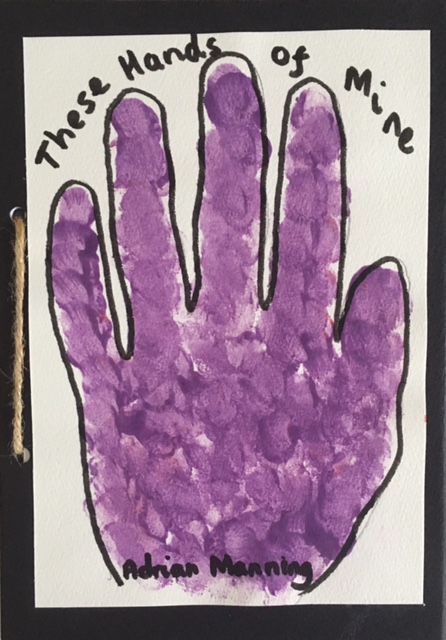
I am keen on adding something more to my chapbooks, so if I can I like to add some art. I painted the cover of Repeating The Mantra (Bottle of Smoke Press), the aforementioned first Concrete Meat Press book, provided the cover photo for my chapbook All This I See Before Me, All This I Cannot Resist (Alternating Current Press), have hand-painted covers to the reissue of These Hands of Mine (Concrete Meat Press) and I did hand-crayoned abstracts in each of the first 50 copies of These Days … so yes, I guess I have been very influenced by the poet/painters that I have come across! I like word and images mixed together at times. Levy, Kenneth Patchen, William Blake and others have done this well. I've been very fortunate to have the extremely talented Janne Karlsson illustrate several of my poems and my chapbook Wide Asleep, Fast Awake, which I am very proud of. It's something that works for me in the right conditions.

What is your opinion of the industries that have grown up around some of the US beat writers,  such as Kerouac, Burroughs and Ginsberg? There also seems to be an industry around Bukowski.

I like the fact that the interest around them ensures that we keep seeing new publications of their work or writing about them. What does make me sad is that the prices of the older books are so high that average collectors cannot afford them! For example, the Bukowski books with paintings!! These writers/poets became very well known and I admire and read them all so I guess where popularity leads to money there is always going to be those who seek to capitalise on it. I get saddened when I read of people other than the writers themselves making vast amounts of money out of their reputation and work. I'm not a capitalist, so anything like that does sadden me.

What projects do you have on the go?

I've recently published two short chapbooks   Dreams from Under a Rock through my press and 13 Poems from the Edge of Extinction, published by the wonderful John Burroughs at Crisis Chronicles Press. I have some poems coming up in publications and I am looking at a poetry reading coming up later in the year. I am also hoping to jump on stage with the incredible Mountaintop Junkshop ‒ I read a poem of mine in one of their songs ‒ soon.

I have been working on a joint chapbook with an American poet that I hope will be out before the year-end and I have some collections of poems that I would like to get out sometime. I am turning 50 late this year, so I would like to get a selected poems volume from the last 20 years together to mark the occasion ‒I may even go for a paperback publication! 

I will be completing publication of further Solid Flesh For Food chapbooks ‒ Neeli Cherkovski, Linda King, Catfish McDaris, Jake St John and the guitarist from an America alternative rock band who I can't name just yet ‒ if it comes together! There will be one more slot as I'll end on number 10 and that's undecided as yet.

I also contribute to a local Leicester culture magazine called Great Central ‒ I have a couple of interviews ‒ one with a local band and one with a legend, and some reviews I'm working on and whatever comes up with that ‒ so there's plenty going on!


Friday, February 17, 2017

Kyle Allan: Poetry as physical intensity

Kyle Allan is a poet, performer, writer, recording artist and literary festival organiser living in Himeville in the KwaZulu-Natal Midlands. He released a CD of poetry, Influences, in 2013 and his debut print collection of poetry, House without walls, was published by Sibali Media in 2016. 

His poems have been published in South African literary journals such as Fidelities, New Coin, New Contrast, Carapace, Kotaz, and Botsotso, and in literary journals in India and the USA.

He has contributed writing to a variety of publications, including the Natal Witness, LitNet, Mindmapsa and potholesandpadkos.

DH: Kyle, I first encountered you a few years ago on Facebook, when you contacted me saying you were planning to start a literary journal. I didn’t know who you were, but at the same time felt that I did know you – I just couldn’t think from where! Where are you from originally, and how did you come to poetry?

KA: I was born at Addington Hospital in Durban in 1987. In the 90s we moved between various places in Durban and the Midlands. From 1999 onwards we were permanently there, living outside Pietermaritzburg, in small towns: Wartburg, New Hanover and Dalton.

My poetry started with encountering the work of Wopko Jensma. It was in October 2002. I was interested in being a writer, perhaps a short story writer and novelist. I was always a voracious reader. However, I had no interest in poetry. I opened a book, A century of South African poetry by Micheal Chapman, which had belonged to my grandmother. In fact, I remember seeing this book, even as a kid in primary school, in my grandparents’ house, and nobody seemed to ever read it. It was one of those books whose role seemed to be to stay there in the bookcase, waiting. Then one day I opened it. The page that opened was near the end, with Jensma’s poems. I read the poems and the words struck me, they came out of the page into me with the way they conveyed life and its actuality. The rhythms and energy of what was being said. From there I read more poems in the book, and it took hold in me, the way a poem is put together, the continual search for what makes it work, it’s like a puzzle but so different, it’s a puzzle that forever comes with new permutations if you are willing to search. I began to write poems, which is what I am still doing fourteen years later. My first published poem appeared in Fidelities in 2005, I wrote it a few months before my sixteenth birthday, and there are a few poems in House without walls that I wrote when I was seventeen. I threw a lot of my teenage poems away, and I always get very irritated when I hear people being embarrassed about their early work. How do you learn to walk? By crawling, first. I am very proud of my crawling. I have never been the kind of person to be embarrassed about my humanity.

There is the influence of the Spanish modernists in your poetry; you have specifically mentioned Vallejo and Lorca. But there is also, of course, the tremendous influence of South African poets, particularly black South African poets, such as Mxolisi Nyezwa, Khulile Nxumalo and Seitlhamo Motsapi. There is also the influence of kwaito − in fact some of your poems have been performed to kwaito.

In my first year of reading poetry, I got any poetry books I could get my hand on, particularly at second-hand stores or book sales. For example, I bought Motsapi’s earthstepper/the ocean is very shallow for only R15 at a book sale because it couldn’t sell. I was 15. I bought two copies of Kobus Moolman’s Feet of the sky, one when it came out, and one two years later. I don’t know why two, maybe I felt bad that they wouldn’t sell, and I thought I could give one as a gift to someone. I ended up losing one copy. I bought an early edition of Oswald Mbuyiseni Mtshali’s Sounds of a Cowhide Drum at a second-hand shop. I loaned it to someone and never got it back. I also got the anthology Voices from Within at a second-hand bookstore. In these early days I bought books like The Bavino Sermons (Lesego Rampolokeng), ten flapping elbows, mama (Nxumalo), Rain across a paper field (Robert Berold), the girl who then feared to sleep (Angifi Dladla), Gova (Ike Mboneni Muila), Echo Location (Karen Press), The other city (Stephen Watson), to name just a few titles.

I read a lot of TS Eliot as well, and despite a contemporary drawing away from him, I find him extremely vital and direct as a writer. We mustn’t ever confuse simplicity and directness. The most direct writers are not often simple. I think his weakest poems are the most anthologised. His early poems, also the quatrains, and The Waste Land are all highly potent. Ash Wednesday is popular because it fits into the gentility mode of English poetry. I have struggled with a lot of English poetry because there seems to be so much pressure on English poets not to be too bold, experimental, not be too different. The sin of English poetry is an obsession with a moderate tone. That seeped over into our poetry a lot, and is slowly wearing out. It’s the kind of thing that held back writers such as Campbell and Livingstone. In the past, many of our writers were either writing in the English tradition or trying to react against its influence. To me it’s irrelevant in many ways. I am a South African, but I also feel really like a stranger to all lands, estranged alike from all the surface symbolism of nations. I’m just not into borders and all the attached baggage. I belong to whatever nationality of words remains authentic.

I didn’t get to the French and Spanish poets immediately, so my development was slightly delayed in that way. Then towards 2007/2008 I got books by Rimbaud, Lorca, Rilke, Leonard Cohen, some US writers, the Nigerian poet Uche Nduka, also Ingrid Jonker, Kelwyn Sole, Gabeba Baderoon.  A book with all Dylan’s lyrics. Reading Kafka’s short stories also inspired me. But 2011 was where everything got capped off to a new level when I encountered Vallejo, and it the same time reviewed Malikanye by Nyezwa. Reading the two in combination is what released the energy to write most of the poems in House without walls. Most of them were completed or drafted in November/December 2011.

I drew to kwaito as a teenager. I liked Mapaputsi, Mzekezeke, Zola, Mdu, Brown Dash, Dr Mageu, I liked the way their content tasted of something very grainy, there was a type of static you felt growing in you, the restlessness of the actual. The feeling you have of something breaking open, the way you felt listening to, for example, going slightly off kwaito into hip hop, Skwattakamp “Umoya”. That feeling of wow, what is this? My life could change here. I don’t think I would feel the same way if I had been a teenager now, the type of music coming out, it feels very baroque, it’s baroque kwaito, baroque hip hop, baroque house, full of secondhand emotions and ideas and not the thing itself. There are obviously exceptions.

The job of a poet or singer is not to tell you what to do, but to tell you what is, and by implication what can be. I was also very struck by people like Simphiwe Dana. If I had to nominate any public figure to become the muse, I would nominate her. It’s become a popular trend among many of our intellectuals to criticise her because of the perception she is some kind of a sellout. That’s why I hate celebrity-hood. It’s a form of rape. People think you owe it to them to keep up to their expectations. In reality, as the saying goes, sometimes the best way to serve your age is to betray it.

You place a strong emphasis on poetry performance, on the oral delivery of poetry, and direct engagement with a physical audience. But you also place strong attention to poetry as ‘word on a page’. There has been a lot said and written about page vs. stage poetry for some time now, but of course it does not have to be an either/or scenario.

I am very comfortable in both, though I started from the written word mostly. I wrote for ten years before I really performed live. I wanted to come with something different, plus I am somewhat of either a perfectionist or perhaps self-conscious of errors, I am more self-conscious than people may realise.

I like direct communication. A lot of writers and performers say that, but what they really mean is crowd-pleasing. Rather what I like is to give the audience that moment of spontaneity, of something totally new and different, I want to give them clarity, energy, wakefulness.


The poem is the poem on both stage and page. Obviously in a weaker writer there are vocalisations and gestures and certain emotional appeals that can hide the weakness in the eyes of many. And on the other hand, you can take a really good poem and perform it to an audience that has been bought up to a certain type of poetry and expectation, and it will miss them, they will justify that on intellectual grounds, and the same poem you will perform to a rural high school where English is not a first language and the kids will have that look in their eyes, they will feel it, they won’t say it’s abstract or whatever, they will just say that it’s good.

It’s a human tendency to like to get into packs and share common denominators. I always have been different. I don’t get too close to people, but also I am open to everyone. There are a lot of other writers out there who transcend scenes as well, I must emphasise.

Ideally, there shouldn’t be any page vs. stage situation. Separately both have their limitations, both have their dangers. Just as you can fall into the tendency of writing to please a particular audience, so as a performer you can have a tendency to perform a particular type of poem to please you audience. Both scenes have their cliques and their objects of mediocrity. But art has always been like that. I can see at a glance if a poem on the page grabs me. I can feel if the performer has duende or not. And there are a lot of overhyped performers and writers, and a lot of underrated of the same.

I will repeat − both the written and spoken scene have their cliques. The spoken scene likes to posture itself as all forward thinking and radical, but many in the scene have got their own boxed ways of thinking sometimes, you will hear the pronouncements and legislations of the “this and that scene” and it’s extremely upsetting when people call themselves poets and legislate for others and yet know nothing of Motsapi, Nyezwa, Muila, Dladla and so on. They have created their own little world, carrying on as if poetry started with them.

You can’t win a war using the enemy’s weapon. You have to look at the structures of language. It’s ironic so often that people who project themselves as the most radical in political outlook, are often so conservative artistically. And that’s ultimately a contradiction that reveals itself. Watch in decades to come the real faces come out, see how many bios will get tweaked and rewritten.

And to the written cliques, we have our own “Georgian poets”.

In 2013 you released a poetry CD called influences. How was it put together, what was the poetry on the CD like, and what your experience of releasing such a CD?   

It was a good CD and experience, but I will never record that way again. I will do things organically. It’s also that I like having a large creative control over what I do, and with this album I was signed to a label and there were certain constraints in terms of song length and album length, which was defined according to what is commercially possible. And I understand it’s a business, so they have their own motivations, which is why I know now I must do it my own way totally, no label. That’s why the last creative field I will enter is the film industry, as that is the most expensive to produce, and when I want to make a film, I want to produce it with no compromises.

I will return with everything completely composed, as pieces that have been performed live regularly. With the previous album, basically I would recite a poem and the producer would compose music around that. So we would create work in the studio and months later it would be performed live. And the two producers did a great job. But in future I will do it organically. Live takes of musicians in the studio. I want it to be performed live first then put in the studio.

You were a participant at Poetry Africa in 2014 and have also been active organising poetry festivals of your own – firstly in Swellendam and now in Underberg. Can you tell us more about these events?

What I like about Poetry Africa is how it brings poets from different countries and experiences and backgrounds together, and the unity and encouragement it gives you. I like that it reminds you that we can live a world without borders. I like that it has a strong focus on poets from around the continent.

One night when I performed, I said, "I am representing South Africa, but first and foremost I am representing the USA – United States of Africa".


At the Swellendam events, I hosted mostly poets from Cape Town, people like Croc E Moses, Nazlee Arbee and Ziphozakhe Hlobo, to name a few, along with some diverse local talent. They were predominantly poetry-centred but we accommodated all genres, featuring local hip hop, classical piano, R&B, among others. With my events, the focus will always be poetry, but at the same time I struggle to organise purely poetry events − this is because of my own interest in a diversity of arts and genres, and I have to be true to myself. I greatly enjoyed the town, but for various factors left, including health and lack of opportunities.

In Underberg, I organised the Underberg Himeville Arts Festival in partnership with the Family Literacy Project. We hosted poets such as Muila, Frank Meintjies, Allan Kolski Horwitz, Kwazi Ndlangisa, as well as other writers and theatre and poetry groups and people in the arts and media world, people like Zuki Vutela (known as Zookey), and local talent. There were also regular poetry workshops, where many kids started writing poetry, and began to develop.

Prior to these events, around 2010- 2012, I did a few small-scale events in kwaSwayimane and New Hanover. In future I will do something there again.

My focus in organising these types of festivals is the act of encounter, which is central to the word and all communication. What happens in a good festival is that you establish a place for people to encounter each other in authenticity. Audience encounters a diversity of performers and ideas. Poets encounter musicians, musicians encounter theatre, and so on. Performance poets encounter poets who focus on the written word. They share ideas. Performance poets learn about poetry magazines and meet poets they might never have heard of. Written poets take their work beyond the normal places. It leads to sharing and the discussing of ideas, which is what our society needs. We need more festivals.

Next year I am organising the Inter Fest in Pietermaritzburg. Similar recipe, but adding more interesting conversations.

In 2016 you published your first collection, House without walls, through your imprint Sibali Media.  What was your experience of this? You seem to be managing your own distribution. What has been the attitude of bookstores? Have they been helpful?

I expected it to be difficult, but I have managed to clear without major bookstores, on my own, around a hundred books. I have contacted and spoken to major players, no positive response. I’m also not going to run after them. I think long term we can’t always depend on a relationship with major bookshops if they are not the ones who come to us. A long-term solution could be some type of writer’s cooperative owned bookshops. Obviously the bookshops say poetry doesn’t sell so they have to look at economic realities. Well, let us then be innovative and look at more ways to distribute without them. It’s 2016. I’m brainstorming on this now.

Some people asked why I didn’t just publish electronically. I think the book must come in print first. Anyone can publish electronically. After about April, I will probably put an electronic version of my poems up, or else distribute it to those who cannot for various reasons get the print version. There are many people out there who have immediate priorities than buying books, and I don’t want to create a situation where people are excluded from knowledge. It’s not going to be a lost sale. They were not going to be able to buy anyway. I will probably try and encourage it to be downloaded and distributed heavily among school goers. I have a school that will be teaching with some of my poems this year.

It’s why I also question the obsession of a war against piracy. Piracy wouldn’t exist in this country without there being great economic divides. People buy pirated CDs because they cannot afford genuine CDs. So now, must we criminalise people for being poor? It’s absurd. That’s why I also prefer to be in complete control of my work. So that in future, when I see my work being pirated, I know that the people who read it will benefit. I will never prosecute people for their poverty. We need to recognise the real crime, and act against it.

That is why, writers and artists, if serious about decolonisation, long term need to consider a direct relationship to the public. They also need to consider, particularly musicians, the greed of big music labels. To save the music industry, we need to destroy it first. If you can sell your music direct to the public, you can sell it more affordably. This is the 21st century. We don’t need to depend on middlemen, and neither on big music labels. We can’t speak decolonisation and then walk past this.

Do you have further plans for Sibali Media? You mentioned wanting to start up a literary journal. What are your feelings about publishing poetry in South Africa?

Publishing poetry is not easy in South Africa, but extremely necessary. The publishing of a book is a very potent act of activism in society, not just to the general structure of society, but even in our relationship to other literary endeavours. I think our biggest challenge is to go beyond what we conceive of as “poetry audiences”. Obviously it doesn’t help that many institutions do not buy into this vision, which means we have to be proactive. I want to publish a poetry magazine in the form of a newspaper that should be available for R5. A paper that you will see sold at robots and at taxi ranks and in tearooms. I want all our poets, from spoken and written backgrounds, those from both backgrounds, to reach an audience of thousands. And then poetry will counter the dominance of rhetoric and slogans and facile symbolism of our times.

It’s not difficult to be creative with the book, and its meaning, that it expands beyond the pages and onto the streets, onto walls, on street signs, in our clothing, in everyday things we use, so that this authentic communication is everywhere.

Because poetry also is intensely physical for me, like my skin.

What are the challenges facing South African poetry?

I think every poetry landscape has layers. There are poets and there are poets. Even in some of the best periods of poetry, not everyone will be a poet. There are a lot of poets who may have a few good poems, but only a few who can put a strong oeuvre together.

With regards to the South African poetry scene, it is a scene and many scenes and directions. I spoke earlier of how its important how cross current must meet each other. This is not to be one type of literature, but rather that diversity can flourish but at a high level of excellence. As we know, iron sharpens iron.

There will obviously be more good writers emerging, if they are able to encounter a diversity of work like I encountered, and not be boxed in by a certain teaching of poetry or by becoming controlled by a “scene”.

I also think it a pity that there is still this kind of fear or marginalisation of more dynamic work by those in various establishment roles. You know in a sense you are being marginalised when people use words like experimental, they define you as an otherness to what is assumed as literary normality. But in terms of you yourself as a writer, if you want to write, you will write, whether you get recognition or not, whether people label you or don’t label you. The act of writing is between you and the page ultimately, a time when you are least of all the person society defines you as, a space where you as a writer are free to be completely honest with yourself. In fact, sometimes recognition can be the worst thing for a writer, he then gets absorbed into the bigger society gestalt, when it would be better to be always on the edge of things.

What would be good nevertheless, are more poetry magazines that reach out to a larger amount of people, because this is a counter to all the clichés and slogans and news stories with their subtle salience towards the interests of those in power. I think more South African poetry needs to be in libraries, especially schools libraries. There are a lot of gifted young writers who have been given a start by being able to access a wide range of novels, including novels written in the last decade or so. So we need the same thing for poetry books, everywhere.

The poems 'You have no notebook' and 'Your silent tongue' are from House without walls, which is available at select bookstores in KwaZulu-Natal or directly from Sibali Media at kyleallanpoet@gmail.com. If ordered directly from Sibali Media, the price is R100 including postage and packaging.